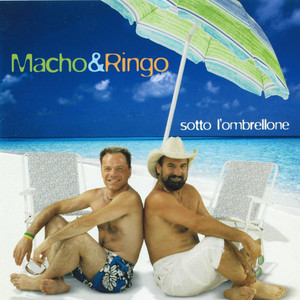
Macho & Ringo
Machismo (; Spanish: [maˈtʃismo]; Portuguese: [maˈʃiʒmu]; from Spanish macho 'male' and -ismo) is the sense of being "manly" and self-reliant, a concept associated with "a strong sense of masculine pride: traditional masculinity". Machismo is a term originating in the early 1940s and 1950s and its use became more widespread in popular culture in the 60s. While the term is also associated with "a man's responsibility to provide for, protect, and defend his family", machismo is nevertheless strongly and consistently associated with dominance, aggression, grandstanding, and an inability to nurture. Machismo is found to be deeply rooted in family dynamics and a Hypermasculinity culture in Latin America, that makes it prone to Toxic masculinity.
The word macho has a long history both in Spain and Portugal, including the Spanish and Portuguese languages. Macho in Portuguese and Spanish is a strictly masculine term, derived from the Latin mascŭlus, which means "male". It was originally associated with the ideal societal role men were expected to play in their communities, most particularly Iberian language-speaking societies and countries. Ser macho (literally, "to be a macho") was an aspiration for all boys. As history shows, men were often in powerful and dominating roles thus portrayed the stereotype of the macho man. Thus the origin of machismo serves as an illustration of past history, the struggles that colonial Latin America faced and the evolution of gender stereotypes with time.
Similar Artists